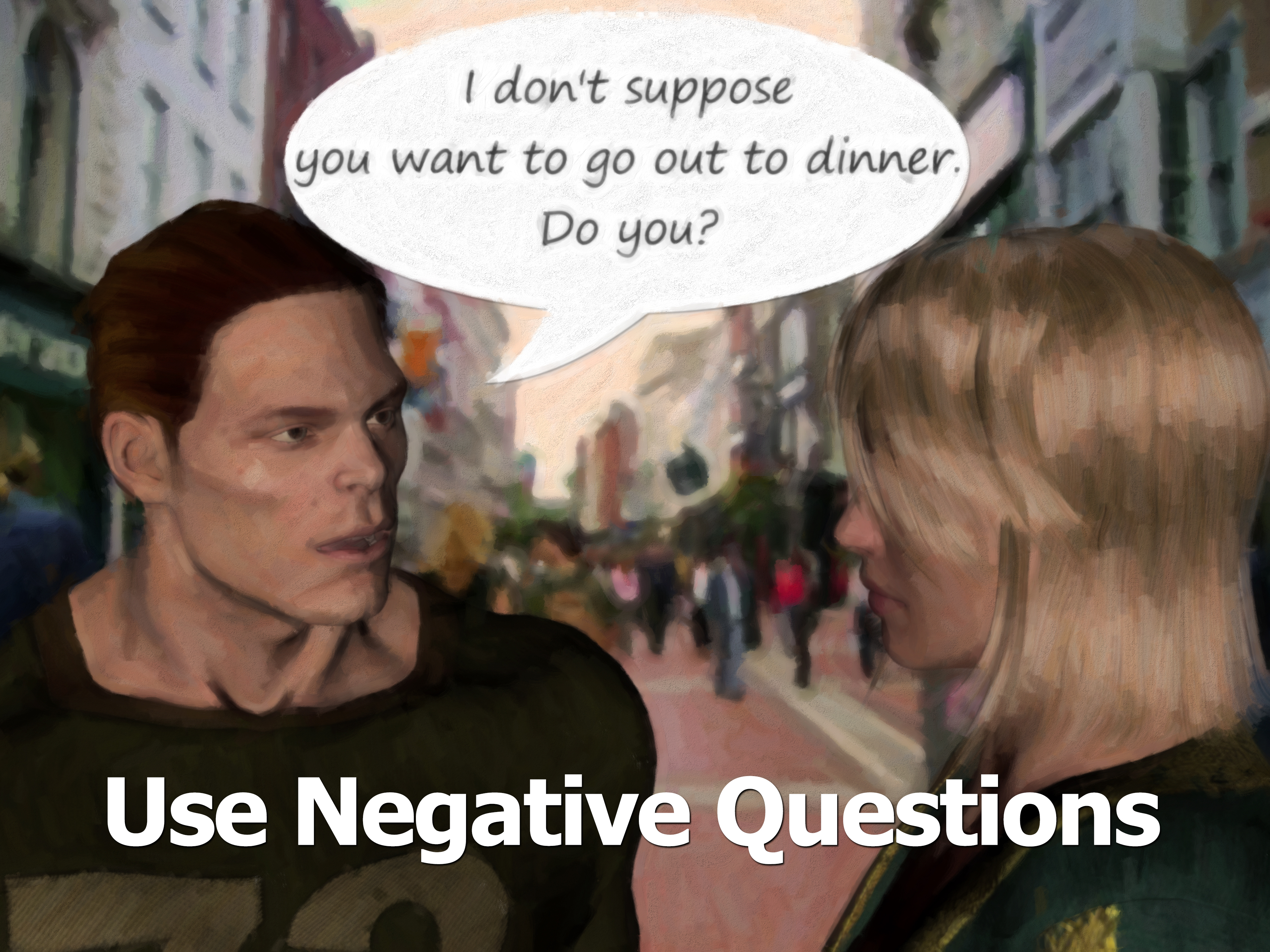
Through experience it doesn’t take a leader long to learn that his/her followers love to buy, but they hate being sold to. If they sense that the leader is trying pull a “sales job” on them, they will resist to the end.Here is where the phrase “I don’t suppose. . . ” becomes magic words in the vocabulary of a skilled leader. Those words keep the leader from painting himself/herself into a corner (see the poster In A Corner for more on this benefit.However, even more importantly it softens the leader’s approach – removing it from the realm of selling an idea to the realm of inquiring about an idea in the negative. It is stated as though the listener is not going to respond positively.
There are few reactions that people have less control over than the reaction to correct another when that person has a wrong perception of them. Here the leader intimates that s/he doesn’t believe the follower is going to respond positively to the suggestion, and the follower more often then not will want to prove the leader wrong with even some motivation of “rescuing” the leader (see the poster Being Rescued for more on this topic).
I don’t suppose you’d try a thirty day test? Start phrasing your requests with “I don’t suppose. . .,” and I believe you’ll never again do it any other way.
Categories: Influence
 Magic Club Leadership Resources