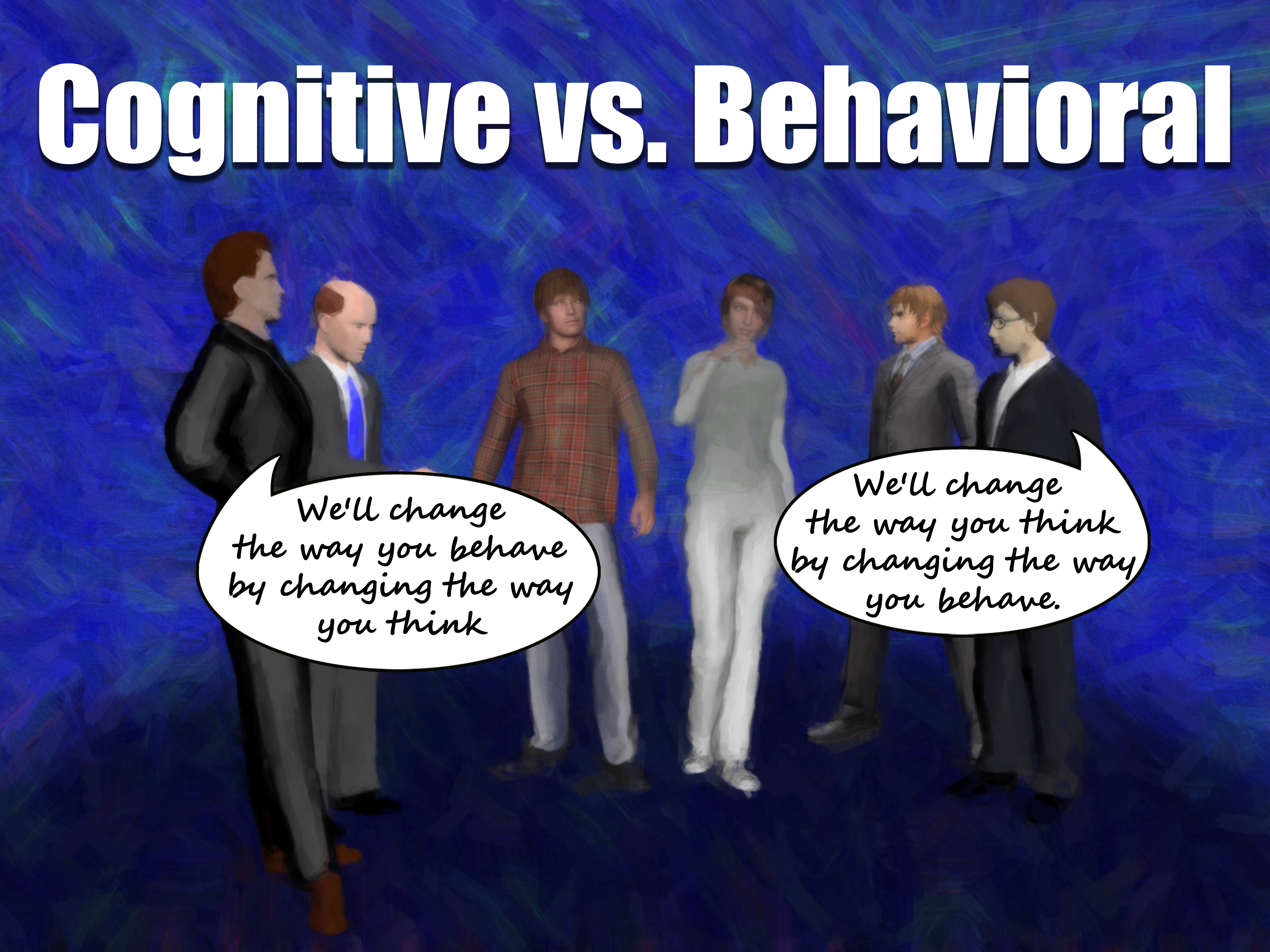
Psychologists tend to fall into one of two camps. You’ll see a couple standing in the middle of this poster and one group of psychologists are saying to them, “We’ll change the way you behave by changing the way you think.” They’re the cognitive psychologists. The other group is saying to them, “We’ll change the way you think by changing the way you behave.” They’re the behavioral psychologists.
The truth is, it’s not either or. It’s both and. A wise leader knows when to incorporate which approach. Many times, I can’t wait for my thinking (or that of my direct reports) to change. I must begin behaving differently before I start thinking differently.
My dad had a poster that he’d hung in the garage. I don’t know why in the garage.
But it said, “If you want to be enthusiastic, act enthusiastic.” And the truth is, many times, we have to start behaving before our feelings will catch up with us. And so, we start behaving in a certain manner and our feelings come along. We start behaving more confident than we are and pretty soon we have confidence. See the poster on confidence for more about this.
On the other hand, our feelings are a result of our thoughts. Every feeling that I have has a thought behind it. So, when I don’t feel confident, there’s a thought that’s lingering there – fueling my feelings. If my feelings are a pot of water, the fire that’s causing it to boil are my thoughts. I need to grab the thoughts that are causing my feelings. I need to get in control of those thoughts and replace them with new thoughts in order to control my emotions and thereby change my behaviors.
So, my encouragement to leaders is to use both approaches with yourself and with your direct reports. Help people grab their thoughts, think about what’s causing them to behave in a certain manner. But also know that to wait until you’re fully confident before you ever do anything will never happen. Sometimes, you just have to do it and then get confidence. That’s the behavioral.
Leaders understand that those two schools of behavioral modification are not in conflict with each other. They’re complementary as you seek to change your own behaviors and the behaviors of those that follow you.
Categories: Instructiveness
 Magic Club Leadership Resources