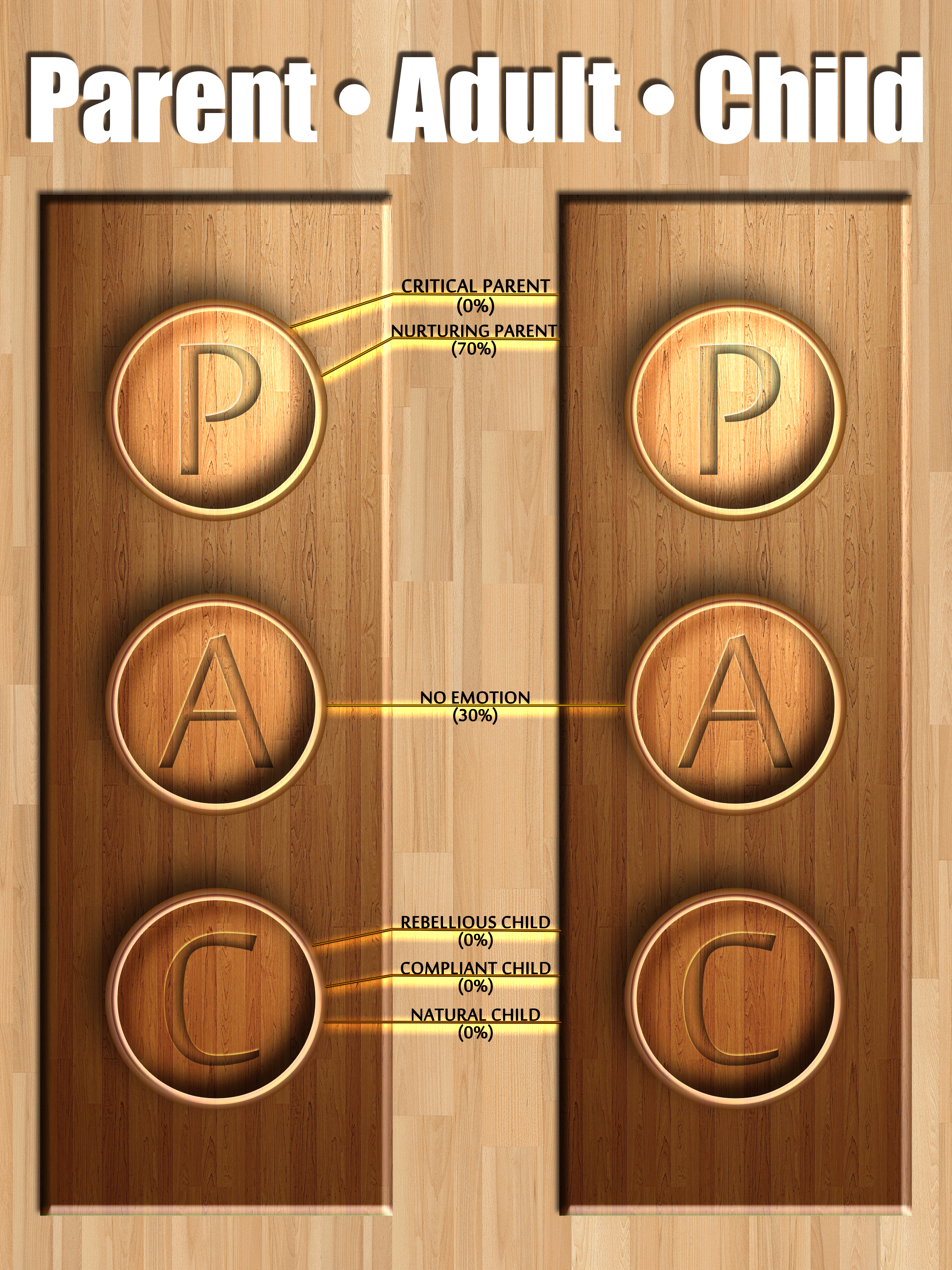
Sometimes referred to as “transactional analysis,” the “parent-adult-child” (PAC) model gives us a good starting place for understanding interactions with others and building our ability to connect as leaders. Those who study this particular model indicate that we talk to each other from one of three ego states.
I can speak to you from my parent ego state, my adult ego state, or my child ego state.
Has anyone ever “gone parental” on you? Then no doubt you know what it is like to be spoken to from someone’s parent ego state. Within my parent ego state, I have a critical parent and I have a nurturing parent.
I also have a child. I have a rebellious child, a compliant child and a natural child. A rebellious child lives just below the surface. It’s the part of me that just wants to scream, “You’re not the boss of me.” When you come at me with your critical parent, you’re going to trip my rebellious child or my compliant child. My compliant child is that part that wants to please. I might tell you what I think you want to hear, not really telling you the truth. My natural child is that playful part of me. The child ego state never gets emotionally older than seven years old. That part of us has all the fears, concerns, and self discipline of a seven year old.
The adult ego state has no emotion. All emotions reside within the parent and the child ego state. The adult would say, “That could be a problem” with no emotion (not even a raised eyebrow).
In relating to others as a leader, I find that the ideal is to relate 70% from your nurturing parent, 30% from your adult. Don’t let the critical parent speak and don’t let the rebellious, compliant, or natural child in the room. We say, “Leave the child at daycare.”
When tempted to go to your critical parent, go to your adult. The adult would say, “That could be a problem” with no emotion either verbally or non-verbally in the expression of your words. By taking that approach, you do not trip an emotional reaction in the other person. Instead, the person you’re addressing will probably ask, “What could be a problem?” and the conversation has started.
Categories: Authority Relationships, Communications, Instructiveness
 Magic Club Leadership Resources